
Launching a jewelry brand as an influencer isn’t just about having great taste — it’s about strategic jewelry timeline planning. Every stage—design, sampling, production, and marketing—takes longer than most new creators expect.
Without a clear jewelry timeline, you risk missing crucial traffic windows and underdelivering to your audience. In this guide, we’ll explore four key phases to help you schedule your jewelry business timeline wisely as an influencer.
Why Smart Time Allocation is Crucial for Jewelry Brand Success?
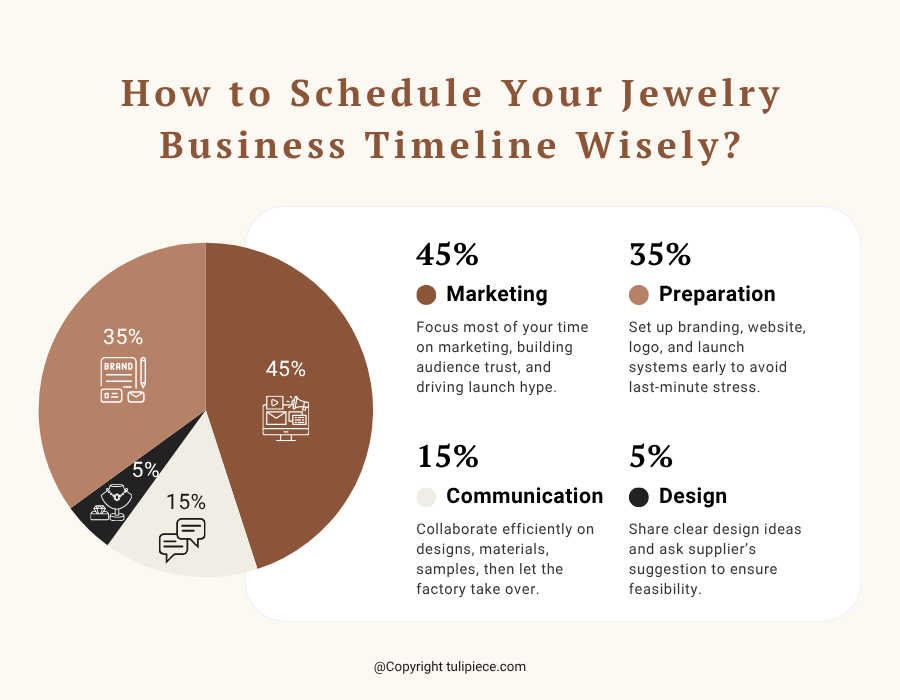
A clear jewelry business timeline keeps you focused on branding, audience engagement, and smooth execution. For influencers, aligning content with your jewelry brand launch timeline boosts visibility, momentum, and sales impact.
Prioritize Branding & Marketing
Your influence is your biggest asset. Dedicate most of your timeline to storytelling, brand building, and audience engagement. A stunning collection without buzz is just inventory, but when paired with authentic branding and anticipation, it becomes a movement.
Delegate Technical Work to Manufacturers
Spend minimal time on design details or production logistics. Leave CAD drawings, sampling, and production logistics to trusted manufacturers while you focus on concept direction, content strategy, and marketing. This is one of the smartest jewelry business tips for influencers starting a jewelry business online.
Especially for Influencers
Traffic is the foundation of your revenue, and it’s often tied to timing, events, and seasonal peaks (like Valentine’s Day, Christmas Day, and Black Friday). If you schedule your jewelry business timeline wisely and seize key traffic moments—like holiday drops, collaborations, or viral trends—you may build massive brand traction with just one viral moment.
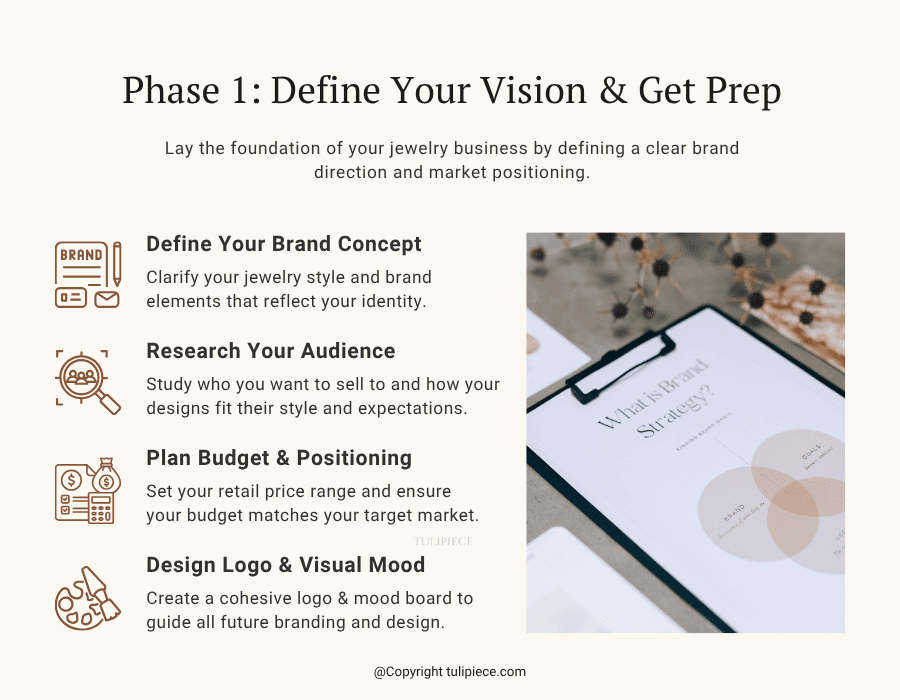
Phase 1: Nail Down Your Idea & Brand Direction
This first stage lays the foundation of your jewelry business plan. Use your existing folloewes data to validate concepts and set the creative tone.
Define Your Brand Concept & Market Positioning
Define your core brand concept, style, and unique elements. Your jewelry should scream you. Make it an extension of your personal style and the trust you’ve built with your audience. Position it to stand out by tapping into trends your followers love, offering something unique that makes your brand memorable through custom or private label jewelry.
Research Your Audience
- Use engagement data, polls, and comments to understand preferences.
- Study competitors targeting similar audiences: Look at pricing, materials, and product types that perform well.
- Create an audience persona including age, interests, spending power, and aesthetic preferences to guide product and content planning.
Plan Your Budget
Outline your total project budget. Start by setting your retail price and researching competitors. Make sure your budget reflects your audience’s spending power, covers production costs, and maintains healthy profit margins.
Design Your Logo & Visual Mood Board
- Create a logo that reflects your brand identity and can be used across social media, packaging, and website.
- Build a mood board with color palettes, textures, and inspiration images for jewelry and lifestyle shots.
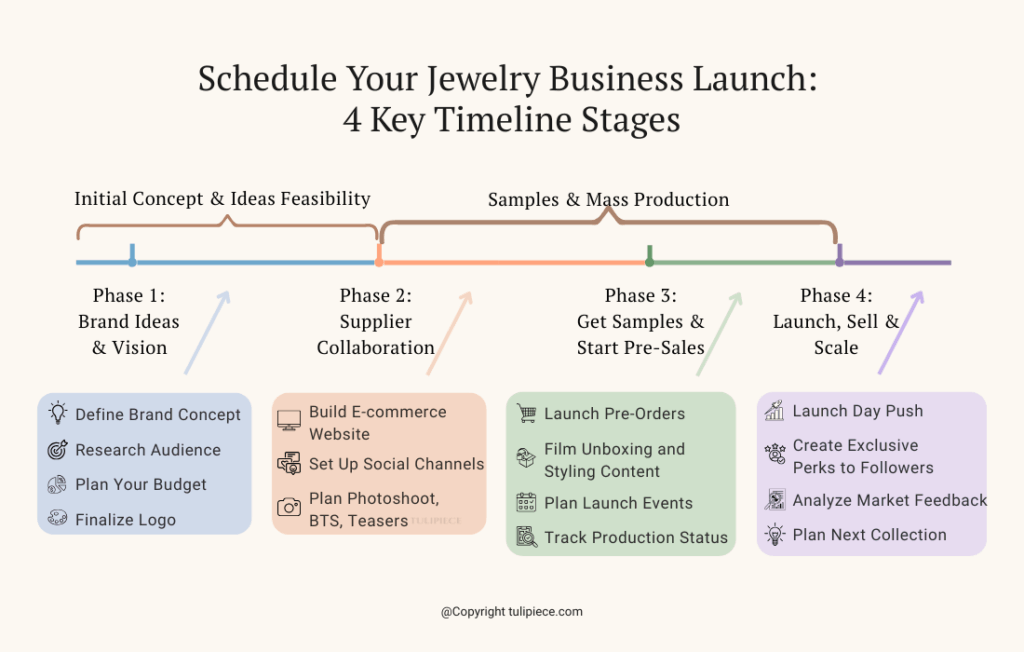
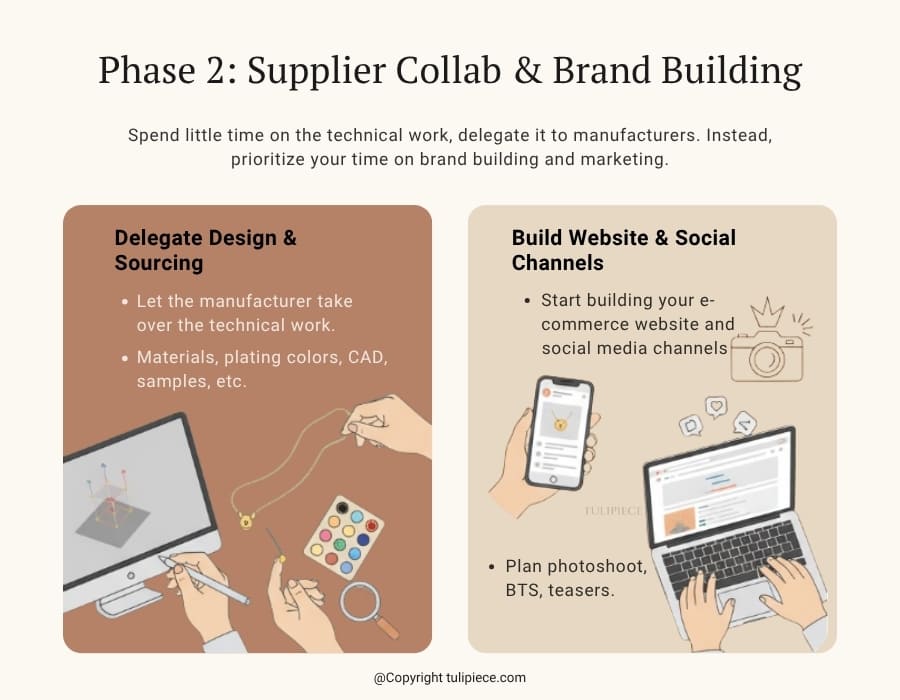
Phase 2: Design Development, Supplier Collaboration & Marketing Prep
Choose partners that follow strict quality control to ensure your products meet your brand promise. While your manufacturer handles the jewelry manufacturing process, your focus shifts to pre-launch marketing. This parallel approach prevents delays and builds demand early.
Manufacturer Focus: Translate Ideas into Manufacturable Designs
Work with your manufacturer to bring your vision to life:
- Jewelry design support from the manufacturer, finalize design concepts, and confirm design feasibility with your manufacturer.
- Choose materials, plating colors, and surface finishes that match your followers’ expectations.
- Confirm technical details and request initial CAD drawings or samples to ensure designs are on point.
- Align on MOQ, pricing, and lead times to keep your timeline ready for your big reveal.
Your Focus: Build Your Pre-Launch Channels in Parallel
While your manufacturer works, use this time to build your foundation:
- Establish Brand Channels: Build your high-converting e-commerce website (optimized for mobile purchases) and fully populate all social media brand accounts (Instagram, TikTok, Pinterest).
- Photography Plan: Map out launch photography and videos—flat lays, Reels, model shots—that scream your brand’s story. Be ready to shoot when samples arrive.
- Warm Up Your Audience: Share behind-the-scenes content like sketches or supplier sneak peeks to build anticipation. Plan your content calendar with teasers and sign-up links for trending moments.
- The Quiet Prep: This time is for essential back-end logistics—setting up your fulfillment system, shipping rules, and customer service templates.
Phase 3: Start Pre-Sales & Hyper-Produce Content
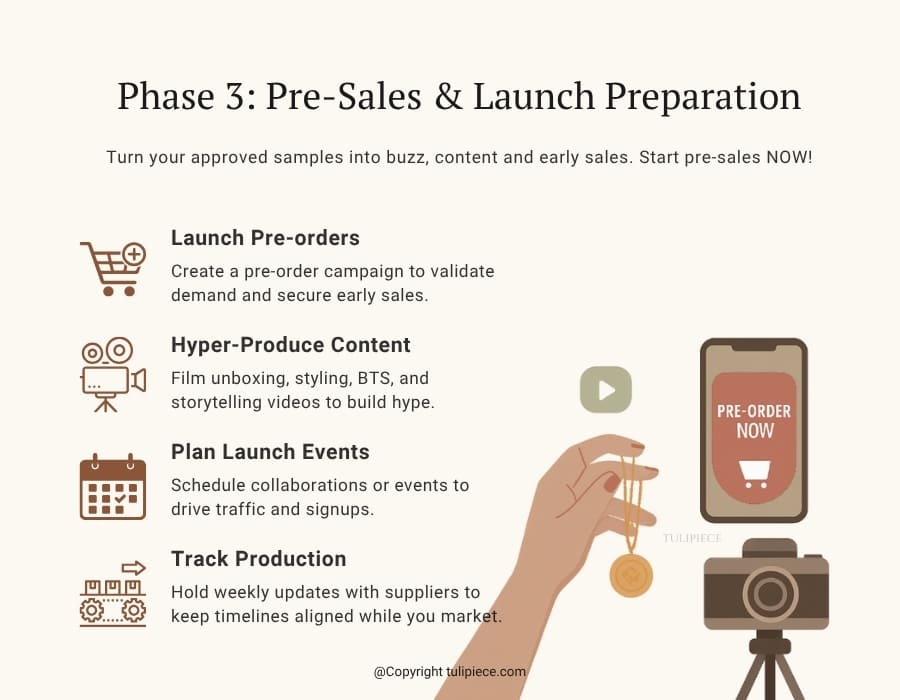
Once your samples are approved, it’s time to shift gears. This phase focuses on driving early sales, creating a strong marketing push, and producing high-quality content across platforms—all while keeping your jewelry timeline on track.
Launch Pre-Orders or a “Waitlist Drop”
As soon as your samples are finalized, launch a targeted pre-order or exclusive waitlist drop for your existing audience. This step validates product demand, builds excitement, and secures initial funding before full production. Schedule the pre-order setup and promotion in advance so it aligns seamlessly with your content calendar.
Build a Content Matrix to Maximize Each Product
Don’t settle for a single product photo—plan a full content matrix. Capture all the materials you’ll need for different platforms in one shoot to stay efficient and consistent.
- Short-Form (TikTok/Reels): Create eye-catching styling transitions, product close-ups, or quick stories behind the design.
- Visual/Interactive (Instagram): Share high-quality studio shots, lifestyle outfit photos, and live Q&A sessions to boost engagement.
- Long-Form (YouTube): Upload in-depth unboxings, weekly styling roundups, or behind-the-scenes videos with designers or the factory.
Launch Event Planning
Finalize all details for your launch events, collaborations, or press outreach. As an influencer, leverage your network to secure high-profile features and cross-promotions. This multiplies your visibility and creates buzz before launch day.
Track Production Status
Set up weekly check-ins with your manufacturer to monitor production, address issues early, and keep your jewelry business timeline tight. Regular updates ensure your marketing plans match actual product readiness, preventing delays and missed traffic opportunities.
Phase 4: Sell, Scale, and Strategize the Next Collection
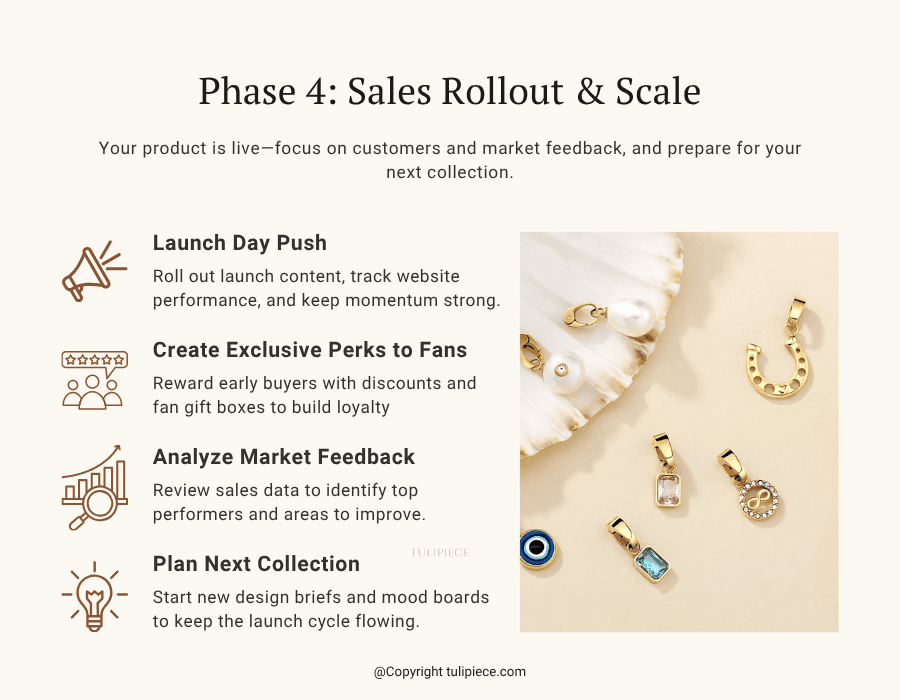
Your collection is live—now it’s time to maximize sales, deepen customer loyalty, and plan what’s next. This stage turns a strong launch into sustainable growth.
Execute a Strong Launch Day Push
Roll out launch-day content and media outreach across all your channels. Monitor site performance, conversion rates, and inventory closely. Stay active in comments and DMs to boost urgency and keep the momentum high.
Create Exclusive Perks for Your Core Fans
Your first batch of customers will almost certainly be your followers—make them feel special. This boosts conversions and builds loyalty.
- Offer limited-time launch discounts or exclusive “fan gift boxes.”
- Include a personalized thank-you card in the packaging.
- Encourage buyers to tag you with a branded hashtag, then select winners to co-design a piece or receive new collection gifts.
Analyze Feedback to Guide Product Decisions
Look beyond sales numbers. Review comments, engagement, and return rates to identify best-sellers and improvement areas. Which videos had high completion rates? Which styles sparked inquiries? Use these insights to shape your next jewelry business plan with data-backed clarity.
Strategize the Next Collection
Dedicate 20% of your time to creating the design brief for Collection B. Successful jewelry brands run on an overlapping 1–2 month new collection cycle, keeping the jewelry business timeline consistent and audience excitement high.
Common Timeline Mistakes to Avoid
Even small planning missteps can delay launches, frustrate followers, and hurt sales. Spot these common mistakes early to stay on track.
- Managing technical production yourself: This creates unnecessary bottlenecks and takes you away from your high-value work (content).
- Starting marketing too late: You pre-launch buzz and audience engagement, reducing visibility and initial sales impact.
- Rushing design decisions: This leads to multiple sample revisions and extra costs, creating unnecessary stress and launch delays.
- Ignoring production lead times: Risks missing high-traffic moments like holidays, derailing your viral launch plans. Place your collection into production at least 3-6 months ahead.
- Misaligned content calendar with actual product readiness: This wastes marketing efforts and frustrates your audience when content previews arrive before products are ready.
Maximizing Revenue Through Smart Time Delegation
As an influencer, you’ve already built trust and a loyal audience—your traffic is your biggest asset. By wisely scheduling your jewelry business timeline, you can make every effort count. Focus on marketing and engagement, while letting a reliable custom jewelry manufacturer handle the technical work. With the right timing and strategy, your influence can turn into a thriving jewelry brand.
FAQs
Start planning your jewelry marketing while your pieces are in production. This gives time to build hype, grow your email list, and create content that drives traffic and sales from day one.
Begin your jewelry launch timeline 3–6 months ahead. This covers design, sampling, production, and marketing so you don’t rush. A clear plan helps avoid delays and missed sales windows.
Delays sometimes happen, so build in a 2–3 week buffer in your jewelry timeline. Use the extra time to grow your waitlist, share behind-the-scenes content, or test marketing ideas to keep momentum strong.
Shift focus to storytelling, influencer marketing, and pre-launch activities. Share sneak peeks, design stories, or polls. This keeps your jewelry brand top-of-mind until products arrive.
Start small—about 3 to 5 jewelry designs. This minimizes financial risk, tests what sells best, and collects customer feedback to guide your next collection.
